• Skip to primary navigation
  • Skip to main content

Kincoppal Rose Bay Swimming Club (KRB Aquatics)

  • My Enrolments
    • Pay Bill / Change Class
    • Book Holiday Program
    • View my child’s progress
    • Mark Myself Absent / Apply Makeup
    • Show Current Bookings
  • Swimming Program
    • Baby’N’Me Program
    • Learn to Swim
    • Squad Program
    • Holiday Program
    • Terms and Conditions
  • KRB Aquatics
    • How to Join KRB Aquatics
    • KRB Superstars Gallery
    • Open SwimCentral
    • Team App
  • Events
    • KRB Race Day
    • Competition Calendar
    • Result Search
  • About us
  • Frequently Asked Questions

Learn to Swim

KRB’s Learn to Swim program welcomes children aged 3 years and older, offering high-quality instruction across all levels and abilities—from absolute beginners to advanced swimmers. Our program is designed to foster a lifelong love of swimming while developing essential water safety skills, confidence and technique in a safe and supportive environment.

OUR TEACHING PHILOSOPHY

At the heart of our program is a commitment to teaching swimming in a safe and supportive environment. We strike a careful balance between water safety and correct stroke technique, ensuring that every swimmer builds strong, lasting foundations.

Our structured progression framework ensures that at every level, swimmers are continually challenged to develop and refine their skills. Emphasis is placed on body position, breath control, stroke technique and overall water confidence.

Our approach emphasises mastering core skills before introducing more advanced techniques. We focus on developing correct technique over short distances first, recognising that quality matters more than quantity in the early stages. Practising skills correctly from the beginning helps prevent the formation of bad habits and supports long-term stroke development.

As swimmers gain confidence and competence, they progress through our structured program, with distances gradually increasing.

LESSON DELIVERY

Lessons are delivered by qualified AUSTSWIM, Swim Australia or Royal Life Saving instructors who focus on creating a positive and engaging learning environment tailored to each swimmer’s needs, ensuring close guidance and encouragement, helping each swimmer develop correct technique and grow in confidence. Progress is carefully monitored to ensure every child is ready to move forward with a strong foundation.

CLASS DETAILS AND SIZE

All Learn to Swim (LTS) classes run for 30 minutes. Class sizes vary depending on the age and skill level of the swimmers and are aligned with industry best practices, following AUSTSWIM and Swim Australia guidelines.

Group ratios range from 1:3 for beginner and younger swimmers, through to a maximum of 1:7 for more advanced levels, ensuring each child receives appropriate attention and instruction.

ASSESSMENT

All new swimmers are assessed prior to joining to ensure they are placed in a class that best supports their individual skill level and learning needs.

Assessments are not required for children under the age of 3 or for those who are unable to swim 5m unassisted, as they will be placed in an appropriate beginner level.

Book New Student Assessment
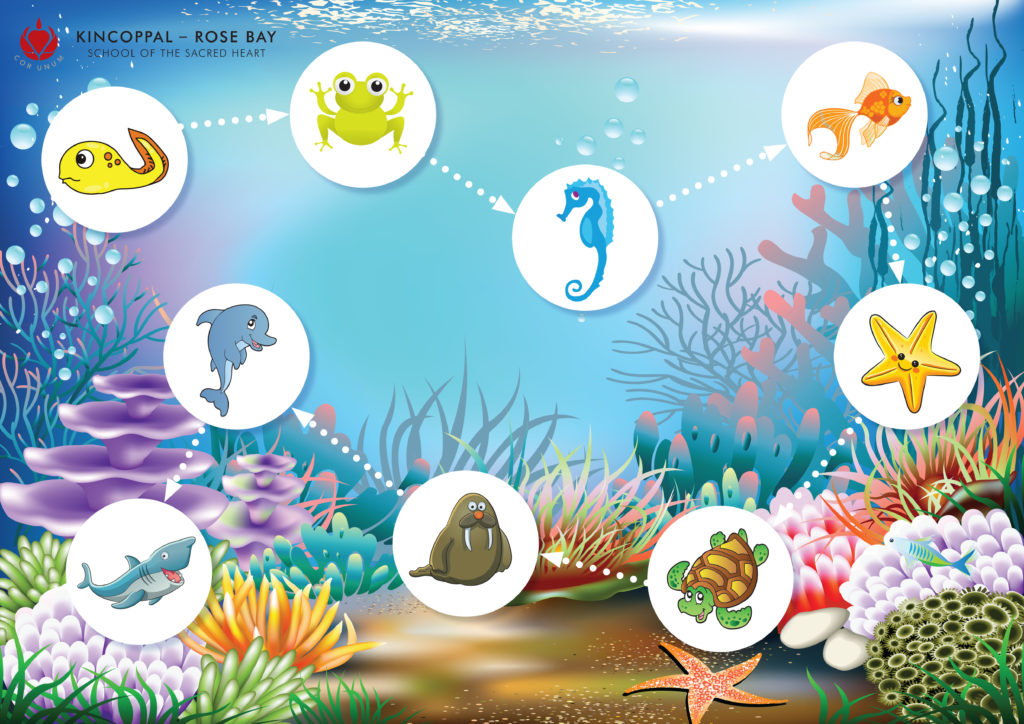
GOLDFISH

Goldfish marks the beginning of a child’s Learn to Swim journey at KRB. This entry-level class introduces young swimmers to fundamental aquatic skills in a fun, supportive and safety-focused environment.

Children learn the essential building blocks of swimming, including basic propulsion, floating, breath control and water safety. Key skills developed in the Goldfish level include dog paddle with breathing, straight-leg kicking, blowing bubbles with the face in the water and safe water practices such as assisted entries, exits and floating techniques. The focus is on building water confidence while laying the groundwork for independent movement in the water.

To graduate this level, swimmers must confidently demonstrate the following:

  • Paddle independently for 5m lifting their head to breathe
  • Float unassisted on their back for 10 seconds and on their front for 5 seconds
  • Perform a safe, controlled entry (fall-in) and return to the pool wall unassisted
STARFISH

Starfish level is designed to build on the fundamental skills developed at the Goldfish level. At this stage, swimmers begin to transition from basic movements to more structured technique, gaining greater independence and confidence in the water.

The focus is on improving body positioning, developing propulsion and enhancing breath control. Swimmers are introduced to key skills such as streamlined gliding (torpedoes), freestyle arm movements and coordinated backstroke kicking. Instruction emphasises correct body alignment, straight-leg kicking and relaxed ankles to encourage efficient, controlled movement through the water.

By the end of this level, swimmers are working towards swimming 7m independently on both their front and back, with improved technique and stamina.

To graduate this level, swimmers must confidently:

  • Perform a front torpedo for 7m independently, maintaining a streamlined body position, with a fast, straight-legged kick and relaxed ankles
  • Kick on their back for 7m independently, keeping chest lifted, chin up, and body controlled with straight legs and floppy ankles
  • Hold a back float for 10 seconds, followed by a controlled flip over and swim to the poolside platform
  • Maintain a front float for 5 seconds, then swim back to the platform
  • Complete six freestyle arm strokes with straight arms, a controlled fast kick and bubbles blown underwater, without breathing.
TURTLES

Our Turtle level represents a vital stage in a child’s swimming journey, where the focus shifts to developing more efficient, independent movement in the water. This level strengthens core techniques and introduces the elements needed for sustained swimming.

Swimmers work on refining their freestyle kick for speed and control, learning how to incorporate effective breathing into freestyle (BAB) and mastering coordinated backstroke arm movements.

By the end of this stage, swimmers are expected to swim 14m of freestyle and backstroke independently with good technique and rhythm. The skills gained in Turtles not only lay the groundwork for more advanced stroke development but also contribute to long-term water safety and endurance.

To graduate this level, swimmers must demonstrate the following skills over a 15m distance to and from the platform:

  • Front Torpedo: Perform with a strong streamlined body position—arms extended, ears squeezed tightly between the arms. Swimmers must show a fast, continuous kick with straight legs, floppy ankles and steady bubbles throughout.
  • Bubble Arm, Breathe Arm (Freestyle): Swim with long, controlled overarm strokes, consistent fast kick, and visible bubbles. Swimmers must breathe by turning their head to the side, placing the ear on the shoulder, all while maintaining rhythm and streamline.
  • Back Torpedo: Maintain a streamlined position on the back with ears squeezed between the arms. A fast, continuous kick with straight legs and floppy ankles is required throughout.
  • Backstroke: Swim with a still head, strong straight arm recoveries, minimal splash on entry and a fast, continuous kick. The chest should stay up with long legs and floppy ankles to maximise propulsion.
SEALS

Seals level bridges the gap between early learn-to-swim fundamentals and more advanced stroke mechanics. Swimmers develop the strength, coordination and confidence needed to swim longer distances while maintaining correct body position, breathing patterns and stroke timing. The introduction of breaststroke (legs) and diving provides important variety and prepares swimmers for future squad-level training.

To graduate this level, swimmers must demonstrate the following skills:

  • Freestyle (25m): Swim 25m of freestyle using the “bubble arm, breathe arm” technique. Swimmers must maintain a strong, continuous kick, long and controlled overarm strokes and breathe with the ear resting on the shoulder to maintain alignment and streamline.
  • Backstroke (25m): Swim 25m of backstroke with straight, alternating arms. The arms must enter the water pinky-first, with a still head, chest up, hips elevated and a strong, steady kick from the hips.
  • Breaststroke Kick with Glide (12.5m): Perform breaststroke kick with torpedo arms, using the rhythm of two kicks and one breath. Swimmers must glide for two seconds after each kick. Technique includes heels tucked to the sides of the bottom, pointed toes, ankles rolling outward and a strong snap of the legs together, followed by a streamlined glide.
  • Standing Dive from the Blocks: Execute a proper standing dive from the side of the blocks, entering the water in a tight streamline position and gliding underwater for 3 seconds with control and alignment.
DOLPHIN

Dolphin level represents a key transition toward competitive swimming, where swimmers refine their technique, build endurance and develop race-ready skills. At this stage, swimmers work towards confidently swimming 50m of both freestyle and backstroke with consistent technique, strong kick and efficient body position. They also begin combining their strokes with basic competitive elements such as proper underwater push-offs, finishes and block dives.

Swimmers are introduced to the full breaststroke with correct timing, mastering the sequence of pull, breathe, kick and glide. Focus is placed on efficiency, rhythm and minimising resistance in the water. In addition, swimmers become comfortable diving from the blocks, maintaining a tight streamline on entry and gliding with control to the flags.

Participation in Club Race Days is encouraged at this level to build confidence, experience and a sense of achievement. It is a great opportunity for swimmers to apply their skills in a supportive, team-oriented environment.

To graduate this level, swimmers must demonstrate the following skills:

  • Dive from Blocks: Perform a standing dive from the blocks with a streamlined entry, gliding to the flags with body alignment and control.
  • Freestyle (50m): Begin with an underwater push-off in a tight streamline, followed by a strong underwater freestyle kick to the flags. Continue swimming with a consistent flutter kick, long controlled overarm strokes and breathing with the ear on the shoulder.
  • Backstroke (50m): Swim with straight, continuous arm action, pinky-first entry with no splash, chest elevated, and a strong kick from the hips.
  • Breaststroke (35m): Demonstrate correct pull-breathe-kick-glide timing with small sculling arms, a quick breath and no wide or dropped arms beneath the body.
SHARKS

The final level in our Learn to Swim program is designed to prepare swimmers for transition into the Squad program. At this stage, swimmers focus on endurance, technique refinement and the further development of all four competitive strokes. The goal is to swim 100m of freestyle and backstroke, 50m of breaststroke and 25m of butterfly with correct underwater work, starts and finishes.

This level emphasises stroke efficiency, breathing control and strong underwater skills, including streamlined push-offs and dolphin kicks. Swimmers build the strength and technique required for squad-level training, while also gaining confidence through race preparation.

Participation in Club Race Days is highly encouraged to support skill application in a fun, team environment. These events offer valuable experience in racing conditions and a sense of accomplishment.

To graduate this level swimmers must confidently demonstrate the following:

  • Dive from Blocks: Perform a strong dive with six underwater butterfly kicks in a tight streamline to the surface.
  • Freestyle (100m): Start with a streamlined push-off and six underwater dolphin kicks. Swim with a fast, continuous kick, long reaching arms, and breathing with the ear on the shoulder.
  • Backstroke (100m): Perform a streamlined underwater push-off and glide. Maintain straight, continuous arms, pinky-first entry, strong kick, and elevated chest throughout.
  • Breaststroke (50m): Show correct pull-breathe-kick-glide timing. Use small sculling arms with a quick breath, avoiding wide or dropped arms under the body.
  • Butterfly (25m): Execute correct timing with a simultaneous dolphin kick, feet together, kick initiated from the chest, arms recovering cleanly over the water with thumbs down and continuous undulating motion.


© 2022–2025 KRB Aquatics · Template from Swim.Rocks · Log in